
Manufacturing & sourcing
How a towel is made —
and where we fit in.
Typical industry process
The seven stages below describe how terry towels are generally made. Not every manufacturer performs every stage in-house — some weave and finish but outsource dyeing or embroidery.
Verified at a specific partner
For your order, we confirm in writing which partner performs each stage, and where. Partner facility profiles will be published here once partners agree to disclosure; until then they are shared with qualified buyers.
Typical production stages
From yarn to export carton.
 Illustration
01 / 07
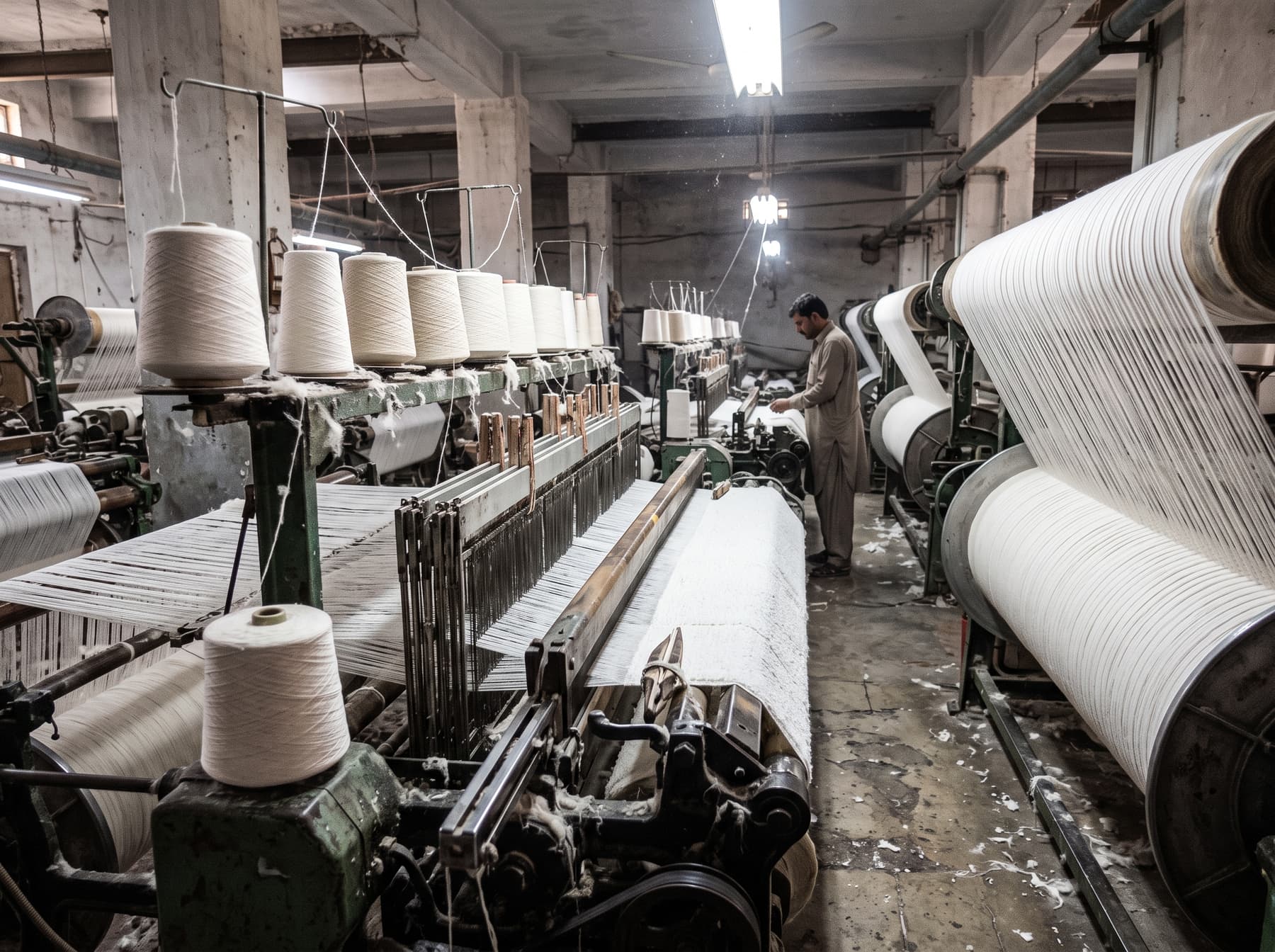
Yarn preparation
Cotton yarn is selected by count and type — ring-spun, combed, zero-twist — then warped onto beams for the ground and pile.
 Illustration
02 / 07
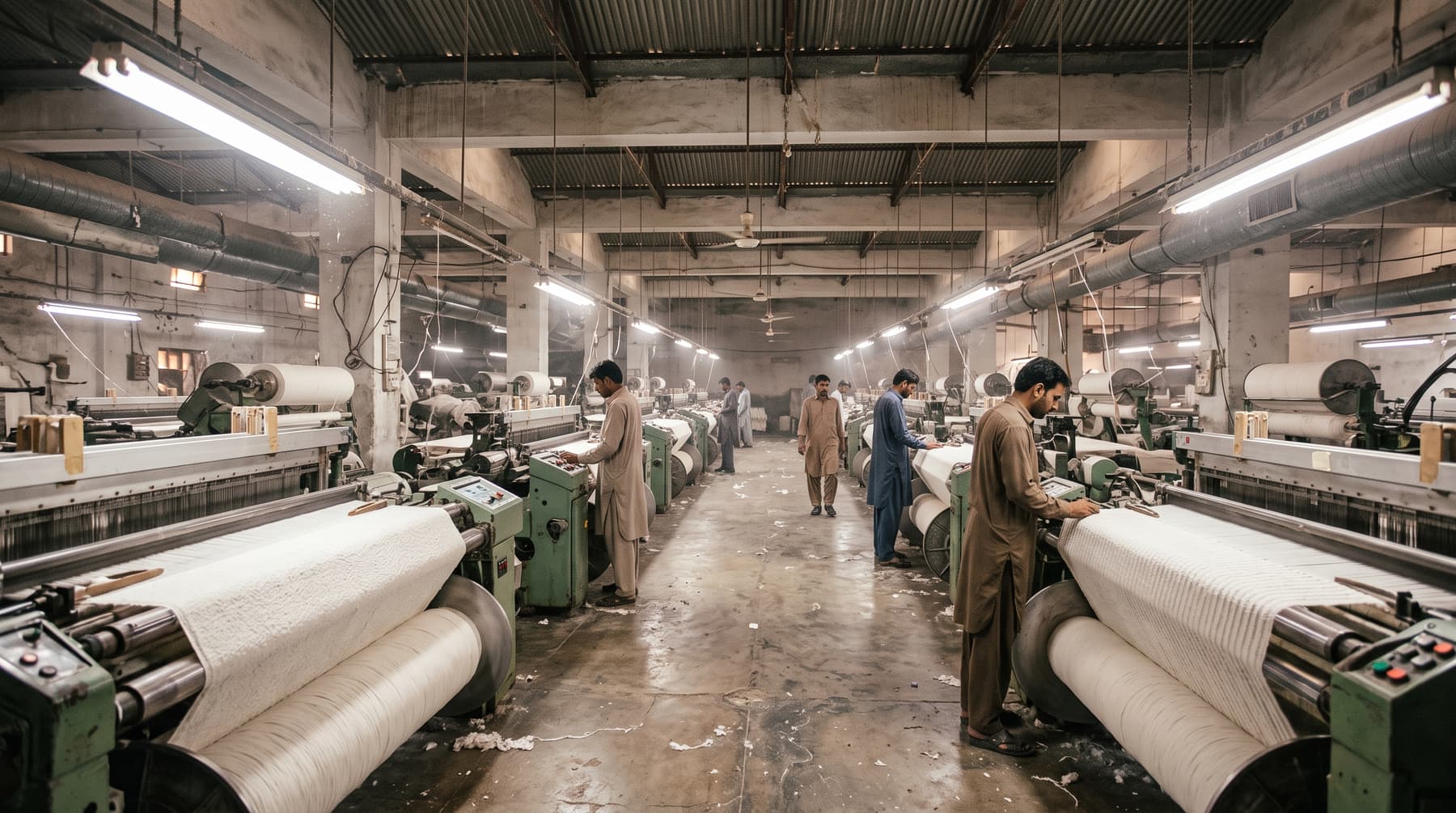
Terry weaving
Terry looms weave the ground fabric and pull the pile warp into loops. Pile height, picks per inch and ply largely determine GSM and hand-feel.
 Illustration
03 / 07
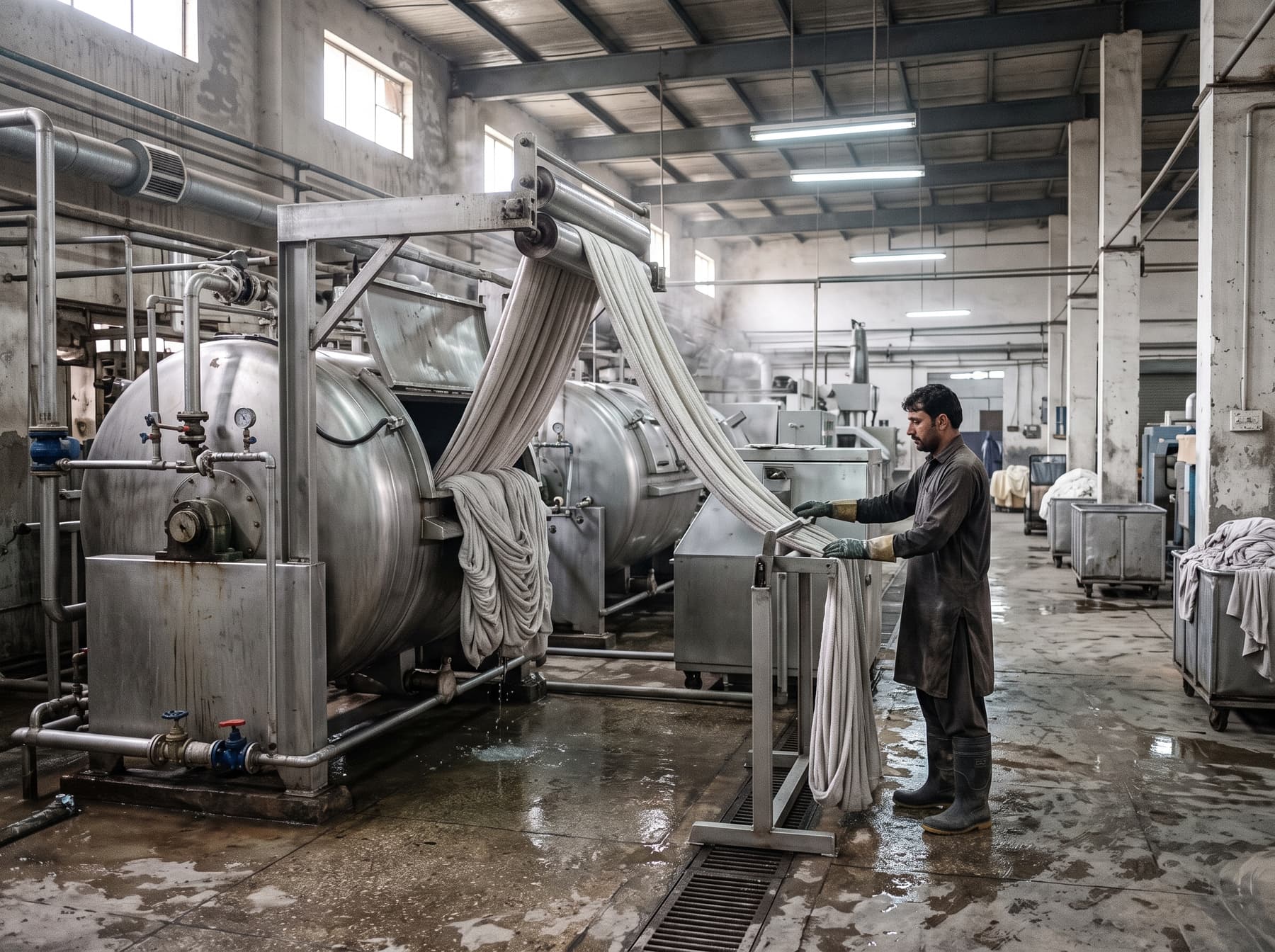
Dyeing & processing
Woven fabric is scoured, bleached or dyed and softened. Yarn-dyed products, such as striped beach towels, are coloured before weaving instead.
 Illustration
04 / 07
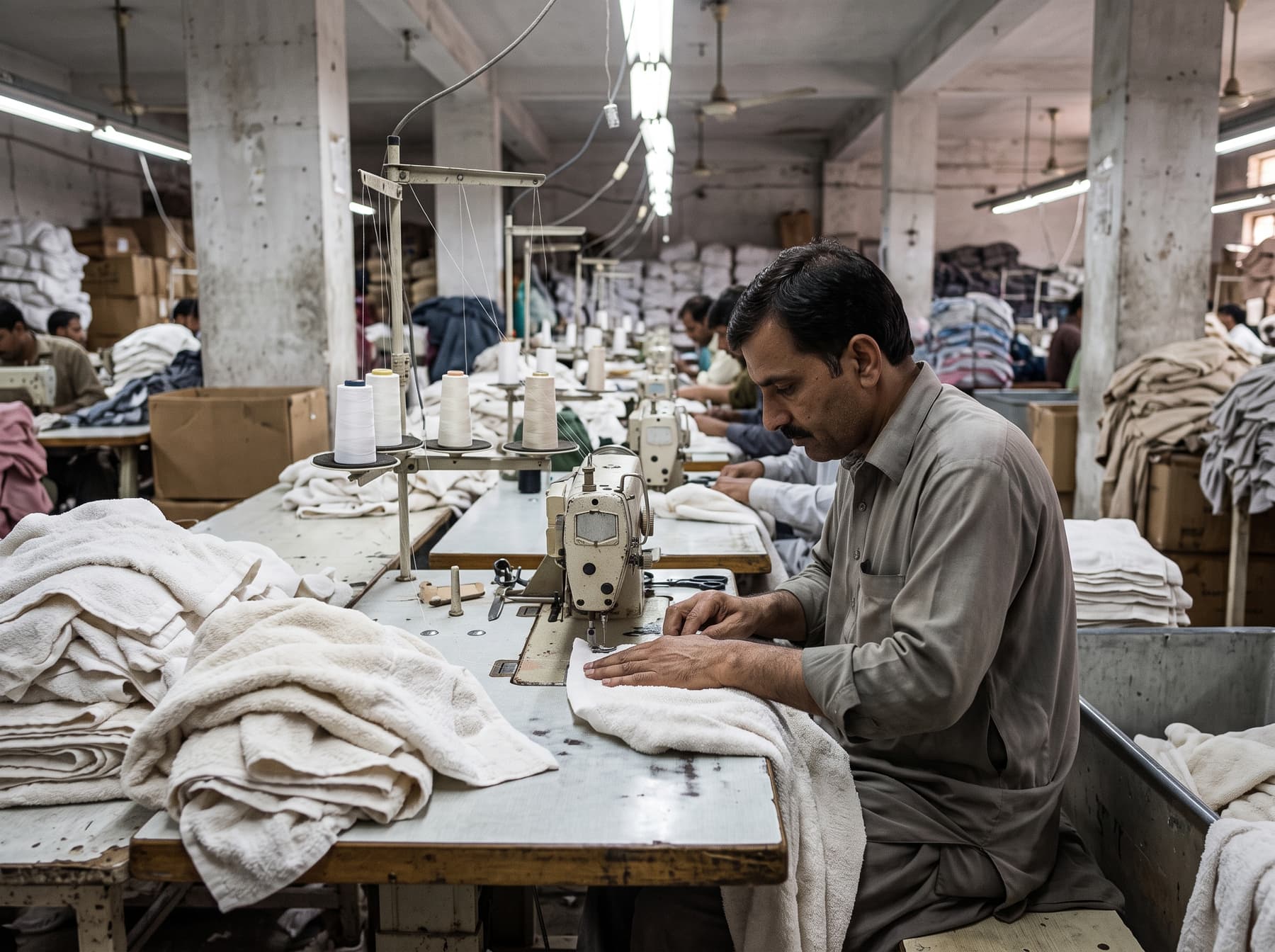
Cutting & stitching
Fabric is cut to size, then hemmed along the sides and ends. Hem width, stitch density and border placement are checked here.
 Detail
05 / 07
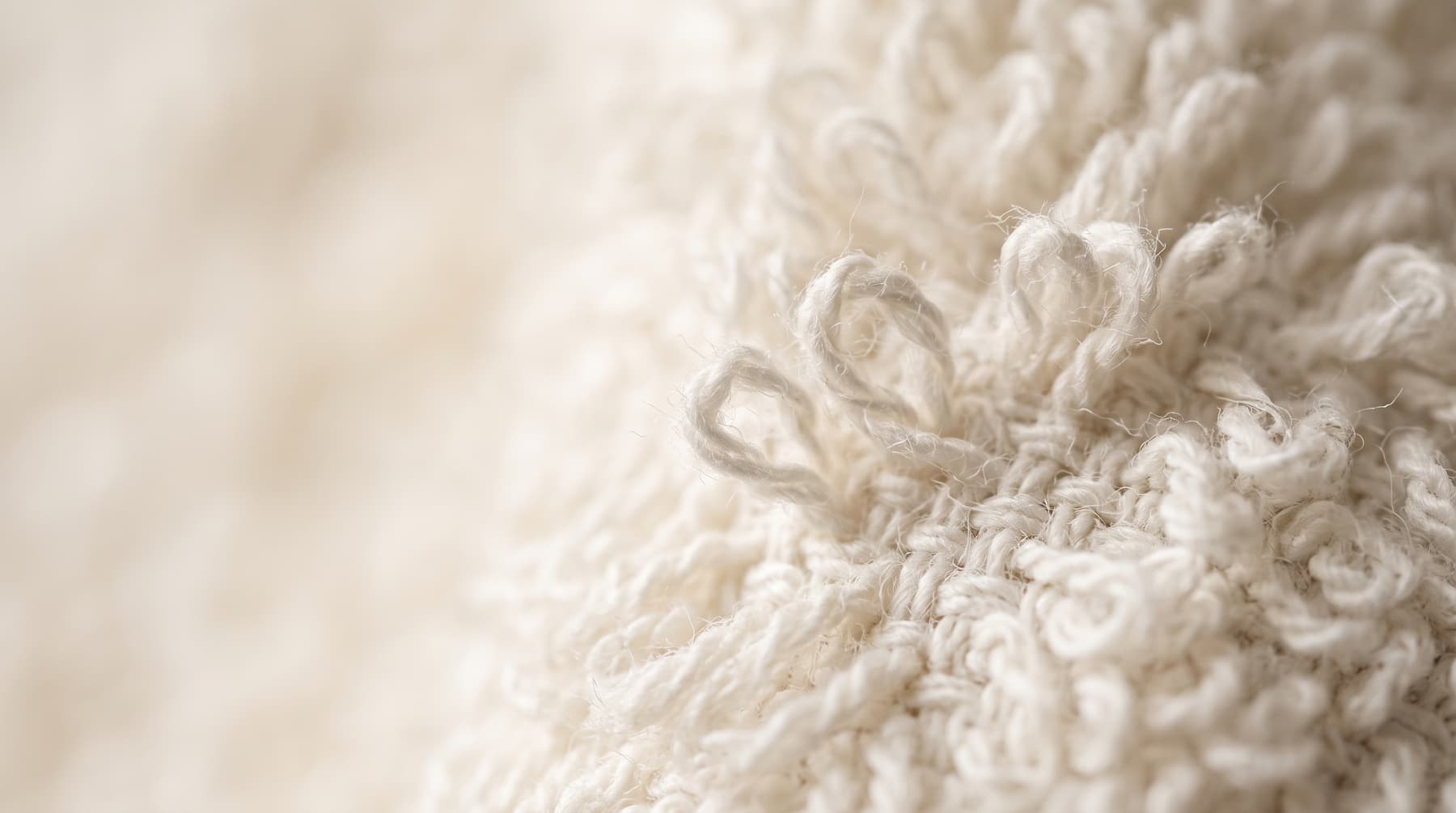
Finishing & branding
Embroidery, labels and any finishing treatments are applied, followed by trimming of loose threads and a hand-feel check.
 Illustration
06 / 07
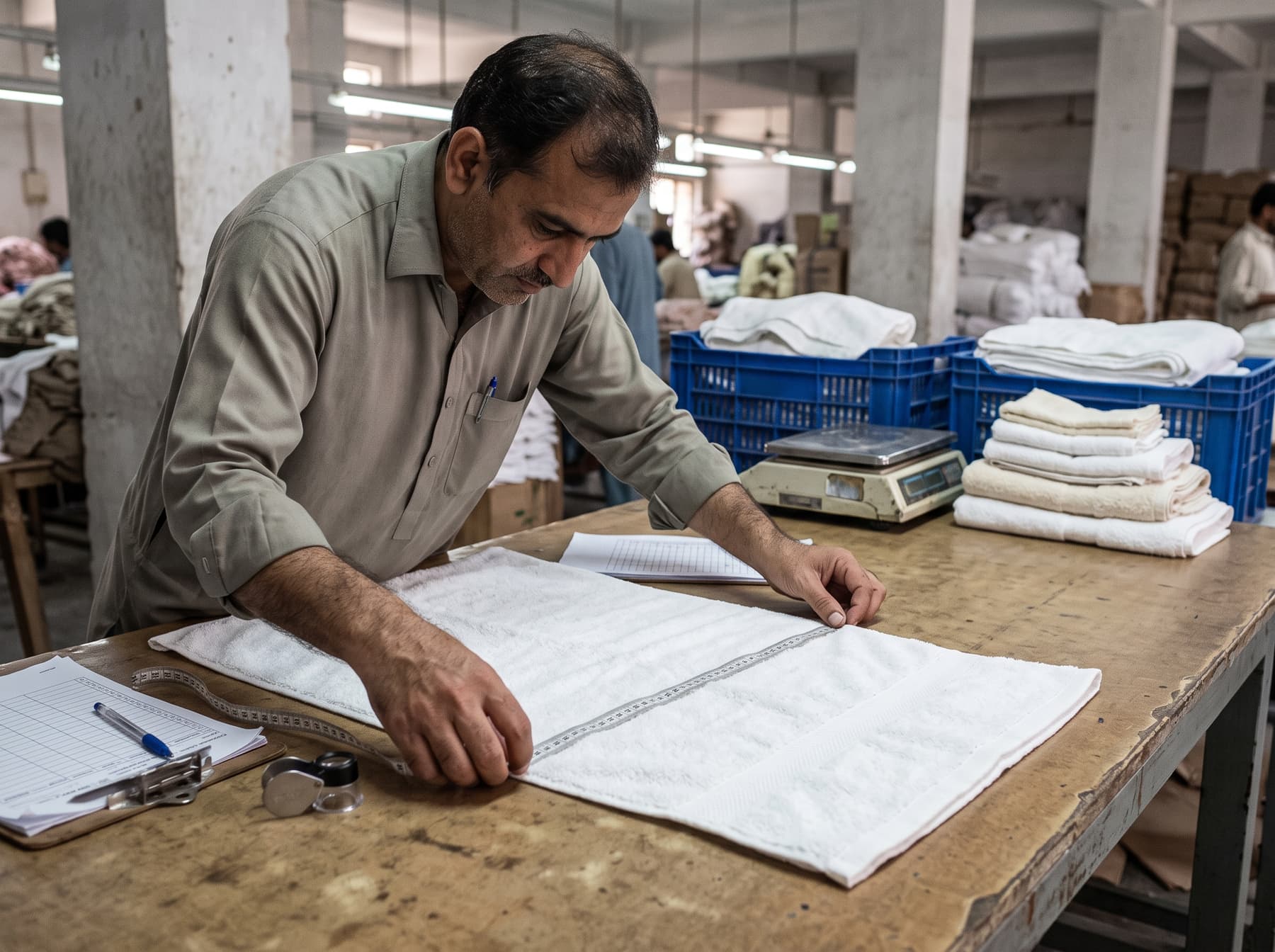
Quality inspection
Finished towels are checked for weight, dimensions, colour, stitching and defects against the specification and approved sample.
 Illustration
07 / 07
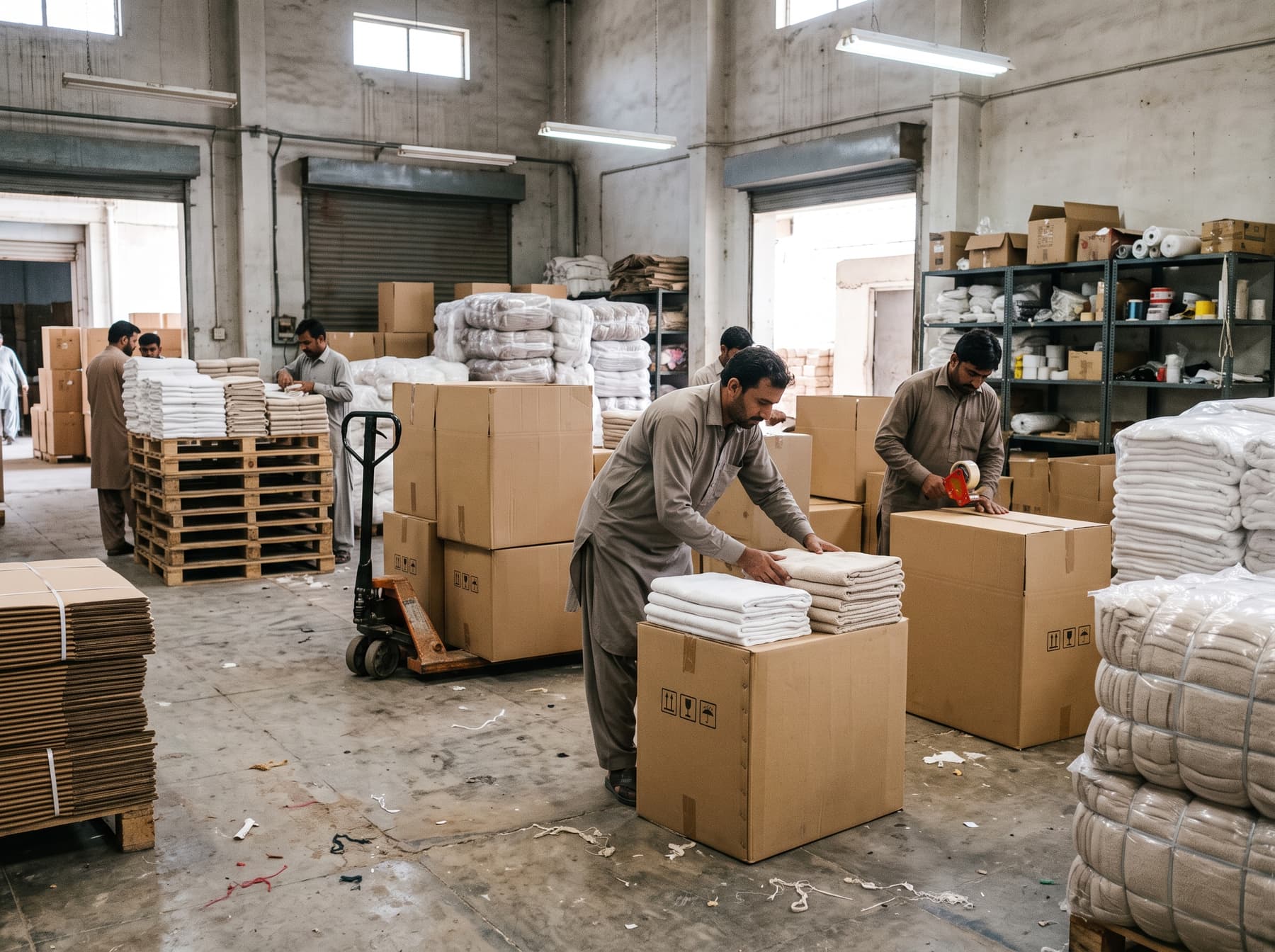
Packing & shipment preparation
Towels are folded, bundled or bagged, packed into marked export cartons and prepared for container loading.
Capabilities through the partner network
Confirmed for your order,
not assumed.
| Process | What it covers | Status |
|---|---|---|
| Terry weaving | Loop pile woven on terry looms. Pile height, ply and pick density define weight and hand-feel. | Confirmed per order |
| Dyeing & processing | Piece-dyed or yarn-dyed colour, bleaching and softening. Colour is matched to your reference. | Confirmed per order |
| Cutting & stitching | Cut to finished size, hemmed and bordered. Stitch density and hem style are part of the specification. | Confirmed per order |
| Embroidery & logos | Embroidered, woven or jacquard logos — method depends on the product and the volume. | Confirmed per order |
| Private labelling | Brand, care and size labels, swing tags and barcodes to your artwork. | Confirmed per order |
| Inspection | In-line checks by the partner, and a pre-shipment check against your approved sample. | Confirmed per order |
| Export packing | Bundling, poly-bagging, retail packaging, carton marks and palletising for export. | Confirmed per order |
WeaveSources’ role
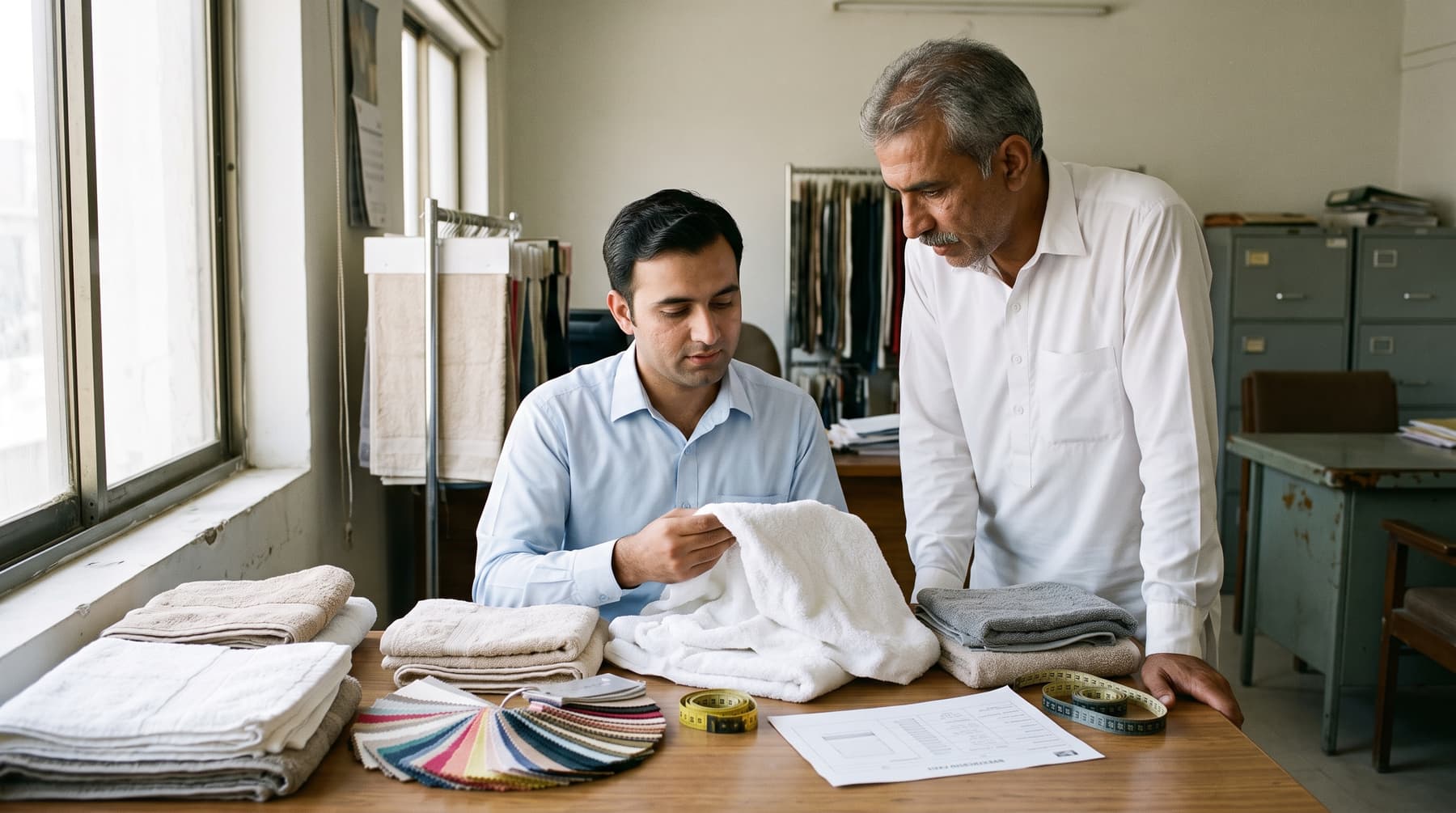
We work on the buyer’s side of the order.
We do not own factories or looms. Our job is to find the right manufacturer, write down what you are buying, and make sure what ships matches what you approved.
 Illustration
- 01
Supplier coordination
We match your brief to independent manufacturers who regularly make that product at your volume, and confirm in writing which processes each one performs.
- 02
Sampling
We turn your requirements into a written specification, have a sample made to it, and record every change until you approve one.
- 03
Quality oversight
We agree a check plan for your order, follow production, and check finished goods against your specification and approved sample before shipment.
- 04
Export planning
Packing, carton marks, documents and handover to your forwarder on the Incoterms you choose — with one named contact throughout.
The buyer
You
- Set the requirement
- Approve the sample
- Own the specification
Sourcing partner
WeaveSources
- Write and maintain the specification
- Select and coordinate the manufacturer
- Coordinate quality checks and export
- Be your single point of contact
Independent mill in Pakistan
Manufacturing partner
- Produce samples and orders
- Hold their own certifications
- Perform in-line production checks
Forwarder / carrier
Logistics partner
- Move goods from port to destination
- Customs handling as agreed
See how an order moves step by step on How we work, and how partner credentials are handled on Partners & credentials.